The Rainwater Charitable Foundation is investing in three promising drug discovery programs that pursue different ways to intervene in tau biology and advance promising ideas toward viable therapies.
For people living with progressive supranuclear palsy (PSP), corticobasal degeneration (CBD), Pick’s disease (PiD), and related primary tauopathies, there are currently no approved treatments that change the course of disease. The abnormal accumulation of tau is central to these conditions, but knowing the culprit is only a starting point. Researchers must turn a biological insight into a molecule that acts on the right form of tau, reaches the brain, and performs consistently enough to justify further development.
The Rainwater Charitable Foundation (RCF) has selected three teams for the inaugural Sprint to Lead (S2L) Drug Discovery Grant Program. Each will receive $350,000 for a one-year project, with the awards totaling $1.05 million. Timothy Miller, MD, PhD, at Washington University School of Medicine in St. Louis; Neil Vasdev, PhD, at MedChem Imaging; and Markus Zweckstetter, PhD, at brainQr Therapeutics are pursuing distinct strategies: changing the balance of tau isoforms cells make, removing disease-associated tau, and preventing tau from adopting harmful states.
The Challenges of Drug Development
A promising laboratory “hit” is not yet a drug candidate. Researchers have to confirm its activity, refine its chemistry or sequence, and test its selectivity, exposure, and biological effects in relevant models. For brain diseases, they also need to ask whether a candidate can reach its target and whether changing that target produces the intended effect. These steps can be costly, especially before a program is mature enough to attract large-scale development funding.
These activities, known as hit-to-lead and lead optimization, are essential for transforming an early discovery into a viable drug candidate. They also require significant resources and specialized expertise, making them a common bottleneck in drug development. For rare diseases like primary tauopathies, dedicated funding to advance promising therapeutic candidates through these critical stages is especially important.
Supporting the Middle Stages of Drug Discovery
S2L is designed for the hit-to-lead and lead-optimization stages. The aim is to generate evidence that guides development decisions and reduces specific uncertainties, rather than suggest that a year of research will produce a treatment. It fits the RCF’s wider drug discovery and translation strategy: support promising programs through difficult transitions, connect investigators with specialized expertise, and help the strongest candidates reach the next development milestone. The RCF also provides continued support as programs mature through its Tau Pipeline Enabling Program.
Through the one-year grants, the S2L program supports the rigorous experiments needed to improve therapeutic candidates, reduce development risks, and establish a clearer path toward in vivo proof-of-concept and subsequent Investigational New Drug (IND)-enabling studies, critical steps toward advancing potential therapies into first-in-human clinical trials. Each team will use the funding to address questions critical to advancing its therapeutic candidate.
For inaugural awardee Dr. Timothy Miller, targeted philanthropic support plays an essential role in maintaining momentum. “When you have this infusion of resources, effort, and focus, it drives things forward,” Dr. Miller explained.
Adjusting the Balance of Tau Isoforms: Dr. Timothy Miller
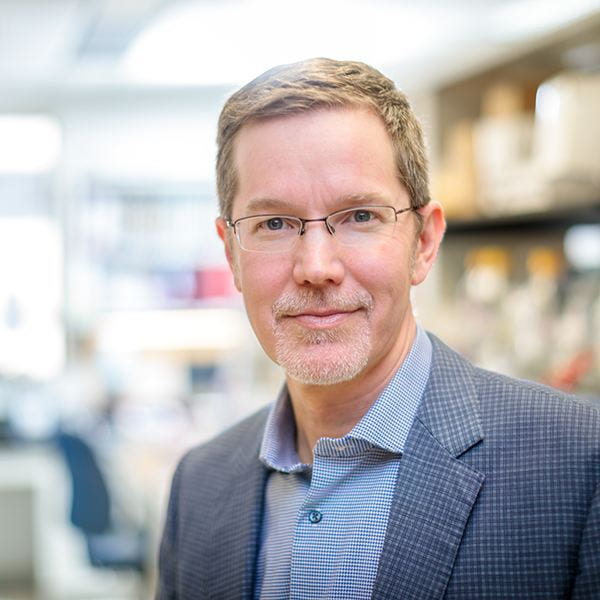
In certain tauopathies, genetic changes disrupt the balance between two forms of tau protein, causing the brain to produce too much four-repeat (4R) tau relative to three-repeat (3R) tau. Cells create these forms depending on whether exon 10 is included when RNA is spliced from the MAPT gene. Some disease-causing MAPT variants shift production toward 4R tau. The abnormal tau deposits characteristic of PSP and CBD are composed primarily of 4R tau, making the ratio of 3R to 4R tau a scientifically grounded therapeutic target.
Dr. Timothy Miller and his team at Washington University are developing an antisense oligonucleotide (ASO) therapy designed to reduce 4R tau without lowering overall total tau levels. ASOs are short, synthetic molecules that interact with RNA to influence how proteins are produced.
The team has already demonstrated promising results in genetically modified mice and human models carrying disease-associated genetic mutations. The next challenge is to broaden the ASO’s effectiveness. An ASO that works for one pathogenic variant may not work equally well for another because variants can alter RNA structure. With S2L funding, they will optimize their lead ASO to improve its potency and duration of action, evaluate its safety, and determine whether it can effectively target 4R tau across multiple forms of disease.
Developing a single therapy that could benefit a broader group of patients would be particularly valuable for rare tauopathies, where treatment options remain limited and drug development is especially challenging. Dr. Miller, who is both a neurologist and a neuroscientist, is acutely aware of the urgency of this work. “When you talk to people living with these diseases, they remind me all the time of the need for speed,” he said.
Turning an Imaging Foothold Into a Targeted Degrader: Dr. Neil Vasdev
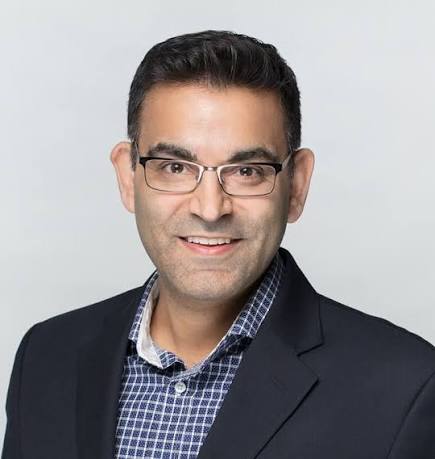
A second strategy is to remove harmful tau species after they form. Dr. Neil Vasdev and his team at MedChem Imaging are pursuing a different approach and developing compounds that can remove harmful tau from brain cells. Their strategy uses molecules called tau degraders, designed to recognize disease-associated tau and recruit the cell’s natural protein disposal machinery to break it down.
This project builds on years of molecular imaging research. Through work supported by the RCF, Dr. Vasdev and his team have developed compounds capable of recognizing disease-associated tau in human brain tissue, including an imaging agent that has advanced into first-in-human studies. The S2L project takes this established chemistry a step further, seeking to transform tau-binding molecules into therapeutic degraders. Over the funding period, the team will develop and evaluate a series of candidate compounds and determine whether they can effectively reduce tau in cells.
This project illustrates how research tools can open unexpected paths to treatment. Molecules originally developed to visualize tau in the brain may now serve as a starting point for therapies designed to remove it.
For. Dr. Vasdev, this remains one of the most exciting aspects of the future of neurodegenerative research and drug discovery. “We’ve made a lot of progress [in the field] even though there’s still work to be done, but every tool we build is hopefully going to change the narrative for the families still waiting,” he noted.
Preserving Tau in a Functional State: Dr. Markus Zweckstetter

A third approach seeks to intervene even earlier in the disease process. Dr. Markus Zweckstetter and his team at brainQr Therapeutics are developing small molecule compounds called Tau-Stabilizers. Tau is naturally flexible rather than locked into one rigid shape, which has made it a difficult target for conventional small-molecule design. Yet that flexibility also creates a possibility: a compound might bind tau in its native state while preserving its normal interactions, including those with microtubules, and reduce its tendency to form or spread disease-associated assemblies. In other words, Dr. Zweckstetter’s project asks whether harmful tau changes can be interrupted earlier.
Through decades of research into tau’s molecular structure and behavior, the team has identified a promising brain-penetrant tau-stabilizing starting compound. With S2L support, they will examine how the chemistry needs to change for frontotemporal lobar degeneration with tau pathology (FTLD-tau), whose tau biology differs from Alzheimer’s disease in isoform composition and other molecular features. They plan to develop and compare related compounds, assess their effects in disease-relevant systems, and test whether an optimized molecule strongly limits tau spreading in a mouse model. A long-term objective is to develop an oral medication that could offer patients a practical treatment option for these progressive conditions.
Dr. Zweckstetter’s motivation is rooted in the possibility of translating scientific understanding into meaningful clinical benefit: “It’s really the belief that we might be able to make a difference.”
From Collaborative Discovery to Potential Treatments
Together, the three awards reflect the RCF’s broader effort to translate advances in primary tauopathy research into potential treatments. The projects act at different points in tau biology. Dr. Miller aims to change the RNA instructions that determine which tau form is produced. Dr. Vasdev seeks to make existing disease-associated tau removable. Dr. Zweckstetter aims to keep tau from taking a harmful path in the first place. Neither replaces the other, and each requires testing potency, selectivity, brain exposure, and effects in relevant models.
Their one-year milestones also illustrate the value of early funding. A more broadly active 4R-splicing ASO, a degrader series with convincing tau-removal activity, or a stabilizer that performs better in tau-relevant models would each provide a reasoned basis for the next investment. A negative or mixed result can be valuable too, if it shows which assumption needs to change. The RCF brings researchers and drug-discovery expertise together so such evidence can inform the next decision rather than sit in isolation. S2L builds on this foundation by focusing resources on a consequential stretch of the development path: experiments that tell us whether a promising approach is ready to advance. For patients and families awaiting meaningful options, disciplined progress at this stage matters. By supporting this work, the RCF aims to help expand the pipeline of potential disease-modifying treatments for patients affected by primary tauopathies.
And the effort is continuing. The RCF is preparing for a second round of S2L funding, with information about the next opportunity coming very soon. Click here to join the mailing list and be among the first to learn more.